
Atlanta Tree Expert Witness
When a case involves trees, it often turns into more than a simple dispute—it becomes a question of science, duty, and evidence. That’s where I step in.
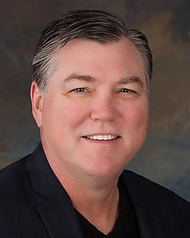
I’m Marty Shaw, Certified Arborist, Consultant, Author, and Expert Witness. I’ve consulted on more than 500 tree-related cases across 24 states and provided testimony in over 30 courtroom matters. My work as an Atlanta Tree Expert Witness helps attorneys bridge the gap between arboricultural science and the law.
Trees don’t follow property lines, ordinances, or contracts. They grow, decay, and fail based on biological processes that the court needs help understanding. My job is to interpret those processes and explain them in clear, legally relevant terms. When attorneys bring me into a case, it’s because they need answers that can hold up under cross-examination—answers backed by data, standards, and decades of experience.
Why Attorneys in Atlanta Need a Tree Expert Witness
Tree law cases are among the most complex property and liability matters you can encounter. A single fallen limb or damaged root system can involve homeowners, developers, insurers, municipalities, and contractors.
The challenge is that the outcome often depends on the details. Was the tree hazardous? Was it properly inspected? Did the responsible party meet the accepted standard of care? Was the damage foreseeable?
These aren’t questions of opinion—they’re questions of science. And that’s why attorneys rely on expert witnesses.
As an Atlanta Tree Expert Witness, I analyze those biological, structural, and environmental facts and present them in ways the court can understand. I help attorneys prove—or disprove—claims of negligence, liability, or value based on measurable, defensible evidence.
The Legal and Scientific Overlap in Tree Cases
Tree cases in Georgia, particularly in the Atlanta area, exist at the intersection of arboriculture and law. You’re dealing with both living organisms and human responsibility.
Atlanta’s dense urban canopy, clay-based soils, and variable weather conditions all play into how and why trees fail. The legal question isn’t whether a tree fell—but whether the failure could have been prevented, and who, if anyone, had a duty to prevent it.
That’s where I come in as a Tree Expert Witness in Atlanta. My expertise allows me to connect local environmental realities with recognized standards of care, such as:
-
ANSI A300 standards for tree care operations
-
ISA Best Management Practices for inspection and pruning
-
CTLA/ISA Guide for Plant Appraisal for valuation
-
Local ordinances, such as the City of Atlanta Tree Protection Ordinance (Sec. 158-26)
By grounding testimony in both local regulation and national arboricultural standards, I help attorneys ensure their cases are supported by reliable, verifiable facts—not interpretation.
Typical Cases Requiring an Atlanta Tree Expert Witness
Attorneys throughout Georgia contact me to consult on cases that involve:
-
Tree Failure and Damage — determining whether a fall was foreseeable and whether the property owner or entity met their duty of care
-
Root Encroachment and Infrastructure Impact — identifying whether roots caused structural damage, and if prevention or mitigation was possible
-
Boundary and Ownership Disputes — clarifying tree ownership, boundary lines, and maintenance responsibilities
-
Construction-Related Tree Damage — assessing how grading, trenching, or excavation impacted existing trees or violated protection ordinances
-
Tree Valuation and Loss Appraisal — calculating the monetary value of trees lost due to negligence, construction, or weather
-
Municipal and Utility Conflicts — determining where liability lies between private landowners and public agencies
Each case involves biological realities—decay, growth patterns, structural stress—that must be interpreted using science, not speculation. That’s the foundation of my work as an Atlanta Tree Expert Witness.
The Role of Expert Testimony in Atlanta Tree Law
In a courtroom, credibility wins. The right expert doesn’t just support your argument—they strengthen it through neutrality, consistency, and measurable evidence.
When I testify, I focus on clarity. My role isn’t to advocate for one side—it’s to help the court understand the truth of the evidence. I explain arboricultural principles in plain language so that judges, juries, and mediators can grasp what happened and why.
Attorneys rely on my experience to answer the kinds of questions that determine liability under Georgia law:
-
Was the tree’s condition visibly defective or diagnosable?
-
Did the property owner have a duty to inspect or remove it?
-
Were accepted maintenance practices followed?
-
Was the loss preventable or an act of nature?
Those questions form the basis of negligence and duty under both Georgia common law and local Atlanta ordinances.
My testimony helps clarify those relationships so the court can reach informed conclusions.
Why Experience Matters in Expert Witness Work
In the courtroom, experience shows.
With over 500 consulting cases and more than 30 expert testimonies, I’ve seen how tree law disputes unfold from investigation to verdict. I’ve worked alongside attorneys, municipalities, insurers, and engineers across the United States.
That national scope gives me perspective—an understanding of what courts expect, how evidence must be structured, and how to present findings that withstand cross-examination.
When I serve as an Atlanta Tree Expert Witness, I apply that same level of discipline and precision. Each report I prepare, each conclusion I present, is supported by documentation, photography, and measurable data. I anticipate challenges before they arise and ensure that my findings meet admissibility standards in both state and federal courts.
Why Early Expert Involvement Makes a Difference
Tree evidence is perishable. Fracture wood decays, roots shift, environmental conditions change. The sooner I’m brought into a case, the more accurate and complete the analysis can be.
Early involvement allows attorneys to:
-
Preserve biological evidence before it’s lost
-
Collect key documents such as inspection or maintenance records
-
Identify gaps in opposing arguments or reports
-
Shape discovery questions around verifiable facts
In many of my Atlanta-based cases, early consultation has prevented misinterpretation of evidence and led to faster, more favorable resolutions. The earlier you bring in a Tree Expert Witness in Atlanta, the stronger your foundation for the rest of the case.
The Importance of Neutral, Defensible Testimony
I’ve learned that the most persuasive testimony is neutral, not emotional. Courts recognize authenticity.
As an expert witness, my responsibility is to present facts—not opinions shaped by who retained me. I base my findings on measurable evidence and accepted professional standards. That objectivity gives the court confidence and strengthens your overall argument.
It’s not about taking sides—it’s about clarifying truth. That’s what gives expert evidence its power.
The Power of Clear Communication
Technical accuracy means little if no one can follow the reasoning.
When I testify as an Atlanta Tree Expert Witness, my goal is to make complex science understandable. I describe how tree structures fail, how decay spreads, and what “reasonable care” looks like under industry standards. I explain it without jargon or unnecessary complexity so everyone in the courtroom—judge, jury, and mediator—can follow the evidence.
I’ve seen firsthand that when the evidence is presented clearly, cases move faster, arguments become stronger, and outcomes are more just. That’s the impact of clear communication in expert testimony.
Establishing Standards of Care in Atlanta
Every negligence case involving trees comes down to one question: Was the property owner’s care reasonable?
In Atlanta, “reasonable care” is defined by both law and science. The City of Atlanta Tree Protection Ordinance and professional standards like ANSI A300 define what should be done to maintain safety and health.
My role is to connect those standards with the facts of the case. I show whether inspection intervals, pruning, or maintenance met accepted practice—or if failure to act contributed to the loss.
By providing that connection, I help attorneys clearly define duty, breach, and causation—the foundation of negligence in any tree-related case.
The Role of Certification and Professional Standards
Certification matters in court. It signals that an expert isn’t just experienced, but recognized by peers as qualified to interpret evidence accurately.
As a Certified Arborist and Registered Consultant, I maintain my credentials through continuing education and professional ethics. I stay current with evolving standards, ensuring that my reports and testimony align with the latest arboricultural and legal expectations.
That credibility translates directly into confidence for attorneys and the court. When I testify as an Atlanta Tree Expert Witness, my qualifications give weight to my words and reliability to your case.
The National Scope of My Expert Work
Although I serve as an Atlanta Tree Expert Witness, my work extends across the entire United States.
Trees follow biological principles that don’t change from state to state—but laws and ordinances do. Having worked in 24 states, I’ve developed a broad understanding of how to integrate arboricultural facts within diverse legal frameworks.
That experience allows me to adapt my analysis to local requirements while maintaining a consistent, defensible methodology. Attorneys appreciate that adaptability because it means their expert testimony remains strong regardless of jurisdiction.
Building a Defensible Record
Every report I prepare is written with litigation in mind. I document every measurement, photograph, and reference so that each conclusion can be traced to a verifiable source.
This disciplined approach ensures my testimony meets the standards expected of a qualified Tree Expert Witness in Atlanta. It also provides you with a clear, defensible record that aligns scientific evidence with your legal argument.
Even under rigorous cross-examination, the integrity of that record stands firm.
Recognized Professional Standards and Authority
The courts expect expert witnesses to demonstrate not just opinion, but authority. My methodology aligns with the professional rigor recognized by national expert witness directories such as SEAK Experts.
That alignment ensures the work I present in court meets the same evidentiary expectations that attorneys and judges rely on nationwide. It’s part of what makes expert witness testimony trustworthy, consistent, and admissible.
Why Attorneys Choose Me for Tree Law Cases
Attorneys who hire me emphasize three consistent reasons: experience, clarity, and integrity.
Experience means I’ve seen nearly every kind of tree dispute—residential, commercial, insurance, and municipal—and know how to build a credible record.
Clarity means I can explain complex biological evidence in simple, direct terms that help the court see exactly what happened and why.
Integrity means I tell the truth of the evidence, even when it doesn’t perfectly align with a client’s expectation. That honesty gives my testimony lasting credibility.
Tree law cases demand precision. The evidence lives in the details—the growth rings, the decay pattern, the roots beneath the surface. Understanding those details requires a professional who can interpret both the science and the law.
As an Atlanta Tree Expert Witness, I’ve dedicated my career to helping attorneys and courts uncover those truths. With more than 500 consulting cases across the country and over 30 expert testimonies, I know what it takes to turn complex arboricultural evidence into clear, reliable, and defensible facts.
I provide expert witness testimony nationwide. Whether your case is in Atlanta, Georgia, or anywhere in the United States, I bring the same commitment to accuracy, professionalism, and integrity.
When the evidence involves trees, make sure it’s interpreted by someone who knows how to make science speak the language of law.